

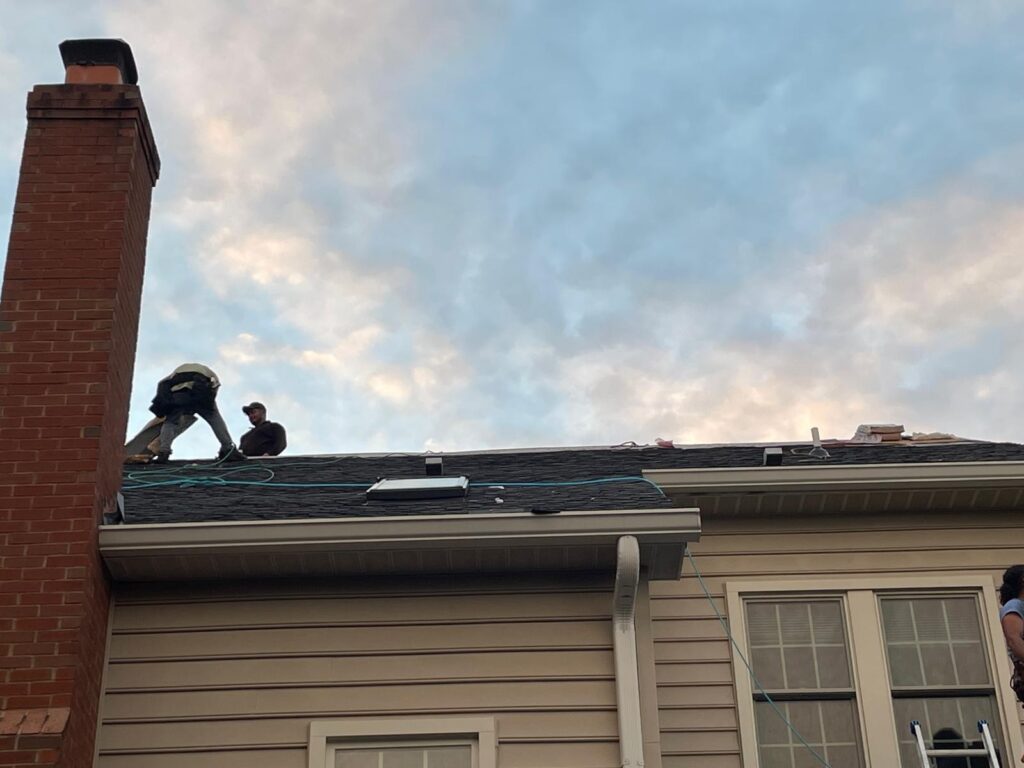
A damaged roof does not always begin with water dripping from the ceiling. Missing shingles, deteriorated flashing, loose granules, and moisture in the attic can appear before a serious leak develops. Rockville homes experience seasonal rain, wind, snow, summer heat, and repeated freezing and thawing. Storms and falling tree branches may also damage roofing materials. Identifying problems early can help limit damage to insulation, ceilings, walls, and other parts of the home.
If you notice any of the following warning signs, it may be time to contact a roofing contractor in Rockville, MD, for a professional inspection.
1. Water Stains or Moisture Inside the Home
Brown or yellow stains on ceilings and walls may indicate that water is entering through the roof. You might also notice peeling paint, damp insulation, bubbling drywall, dripping water, or a persistent musty odor.
A visible stain does not always appear directly below the source of the leak. Water can travel along roof decking, rafters, pipes, and other building materials before reaching the ceiling. This can make the source difficult to locate without a professional inspection.
Check accessible attic areas after heavy rain if you can do so safely. Look for wet insulation, dark marks on the wood, or daylight entering through an opening. Do not touch wet electrical fixtures, wiring, or equipment.
2. Missing, Cracked, Curled, or Loose Shingles
Strong winds and severe storms can loosen or remove shingles. Age and prolonged exposure can also cause shingles to crack, curl, blister, or lose their protective surface.
Damaged shingles may allow water to reach the underlayment and roof decking. Even a small exposed section can become a larger problem during the next storm.
Homeowners can inspect the roof visually from the ground or through an accessible window. Avoid climbing onto a wet, steep, sagging, or storm-damaged roof. A qualified roofing contractor should perform the close-up inspection.
3. Excessive Granules Near Gutters and Downspouts
Asphalt shingles contain protective surface granules. Some loose granules are normal, especially after a new roof is installed. However, large or increasing amounts in gutters or near downspouts may indicate that older shingles are deteriorating.
You may also notice areas of the roof that appear darker, smoother, or uneven because the protective surface has worn away. A roofing professional can determine whether the granule loss is limited to a small area or affects a larger portion of the roof.
Granule loss alone does not automatically mean the entire roof must be replaced. The roof’s age, installation, condition, and extent of wear should all be considered.
4. Damaged Flashing Around Roof Openings
Flashing helps direct water away from vulnerable areas, including chimneys, skylights, vents, valleys, and roof-to-wall connections. Loose, corroded, cracked, or poorly sealed flashing can create an entry point for water.
These leaks may be difficult to detect because the surrounding shingles can still look intact. Interior stains near a chimney, skylight, or exterior wall may point to a flashing problem.
Prompt repairs may prevent water from spreading into the decking, framing, insulation, and interior finishes.
5. Sagging or Uneven Roof Areas
A healthy roofline should generally appear even. Visible dips, waves, or sagging sections may point to deteriorated decking, trapped moisture, framing problems, or other structural concerns.
Never walk on a roof that appears soft, unstable, or uneven. The affected area may not safely support a person’s weight. Arrange an inspection as soon as possible so the cause and extent of the problem can be evaluated.
A sagging roof section should be treated more urgently than minor cosmetic wear.
6. Clogged or Damaged Gutters
Gutters and downspouts help move rainwater away from the roof edges and foundation. Leaves, branches, and other debris can block drainage, while loose or damaged gutters may allow water to overflow or collect near the fascia.
Watch for:
- Water spilling over the gutter edge
- Loose or separated gutter sections
- Standing water
- Damaged fascia or soffit materials
- Water collecting near the foundation
- Granules gathering near downspouts
Gutter problems do not always mean the roof is damaged. However, poor drainage can contribute to moisture problems around the roof edge and other parts of the home.
7. An Aging Roof or Repeated Repairs
Roof age is an important consideration, but age alone does not determine whether replacement is necessary. Material quality, installation, attic ventilation, maintenance, tree cover, and storm exposure can all affect a roof’s condition.
A localized problem may be suitable for repair. Replacement may be more practical when deterioration is widespread, leaks keep returning, decking is damaged, or repairs would only provide a short-term solution.
A professional inspection can help homeowners compare the condition, expected performance, and cost of repairing versus replacing the roof.
When Should You Request Immediate Help?
Contact a roofing professional promptly if you notice:
- Active water entering the home
- A visibly sagging roof section
- Missing materials after a storm
- A tree or large branch striking the roof
- Daylight entering through the roof structure
- Water near electrical fixtures or wiring
- Significant damage that leaves the interior exposed
If storm damage creates an immediate danger, keep family members away from the affected area. Do not climb onto the roof or attempt repairs during rain, strong wind, or unsafe conditions.
What Does a Professional Roof Inspection Include?
The exact inspection depends on the home and roof type. A roofing contractor may evaluate:
- Shingles or other exterior roofing materials
- Flashing around chimneys, vents, skylights, and walls
- Valleys, ridges, penetrations, and roof edges
- Gutters, downspouts, fascia, and soffits
- Visible signs of moisture or damaged decking
- Accessible attic areas, insulation, and ventilation
- Evidence of storm, tree, or animal damage
After the inspection, the contractor should explain what was found and whether maintenance, repair, or replacement should be considered.
Key Takeaways
- Ceiling stains, damp insulation, and musty odors may indicate a hidden roof leak.
- Missing shingles, damaged flashing, heavy granule loss, and sagging areas require attention.
- Homeowners should inspect from the ground and avoid walking on an unsafe roof.
- Prompt inspections may help prevent moisture from spreading to other parts of the home.
- Roof age alone does not determine whether repair or replacement is the better choice.
Roofing Frequently Asked Questions
Q. What factors affect the cost of a roof repair in Rockville?
Ans: The cost depends on the location and extent of the damage, roofing material, roof height and pitch, accessibility, flashing requirements, and the condition of the decking below. Emergency tarping, structural repairs, ventilation work, or difficulty matching existing materials can also affect the price. An on-site inspection is the best way to prepare an accurate written estimate.
Q. Can a leaking roof be repaired without replacing the entire roof?
Ans: Yes, some localized leaks can be repaired without replacing the entire roof. The best solution depends on the leak’s source, the surrounding material, the roof’s age, and whether water has damaged the decking or framing. Repeated leaks or widespread deterioration may make replacement more practical.
Q. Which roofing materials work well for Maryland homes?
Ans: Asphalt shingles are common because they are available in many styles and price ranges. Metal, synthetic, and other roofing materials may also be appropriate for certain homes. The best option depends on the roof design, budget, appearance, expected maintenance, and installation requirements.
Q. Should a roof be inspected after a strong storm?
Ans: An inspection is advisable if you notice missing shingles, loose materials, fallen branches, interior moisture, or visible changes to the roof. Homeowners can look for obvious problems from the ground, but storm damage is not always visible without a closer professional evaluation.
Q. What should homeowners check before hiring a roofing contractor?
Ans: Verify the contractor’s license, insurance, roofing experience, written scope of work, payment schedule, and warranty terms. Ask whether the estimate explains materials, labor, exclusions, cleanup, and procedures for unexpected damage. Maryland homeowners should also confirm that the contractor’s MHIC license is active.
Protect Your Home Before Roof Damage Spreads
Roof warning signs should not be ignored. A loose shingle or small leak can allow moisture to reach insulation, decking, ceilings, and walls. An early inspection can help identify the source and determine whether a focused repair or a larger roofing project is appropriate.
If you need a roofing contractor in Rockville, MD, Alihan LLC provides roof inspections, repairs, and replacement services throughout Rockville and surrounding Montgomery County communities.
Alihan LLC is fully licensed and insured under MHIC License #161816 and holds a BBB A+ rating. We provide clear recommendations, written estimates, and roofing solutions based on the condition of your home.
Call 301-674-9548 or visit AlihanLLC.com to request a free estimate.